
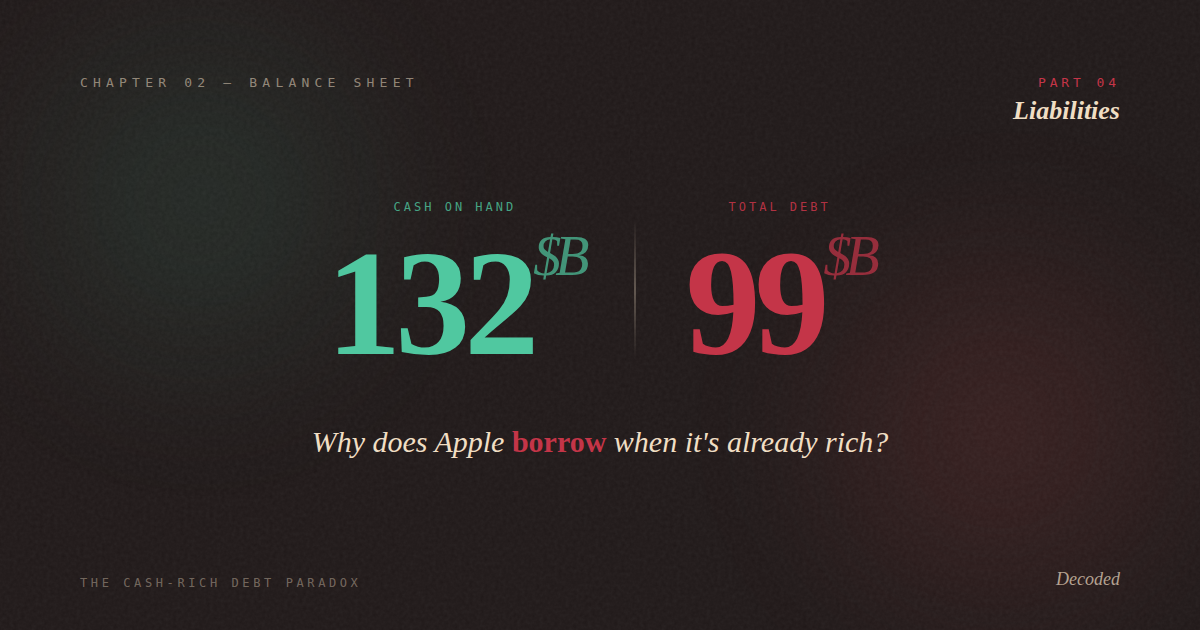
How to Read a Balance Sheet (Part 4): Liabilities and the Cash-Rich Debt Paradox
Apple holds $132B in cash yet carries $99B in real debt — why? This Part 4 breaks down Apple's $285B in liabilities, separates operational from financial debt, and resolves the cash-rich debt paradox.
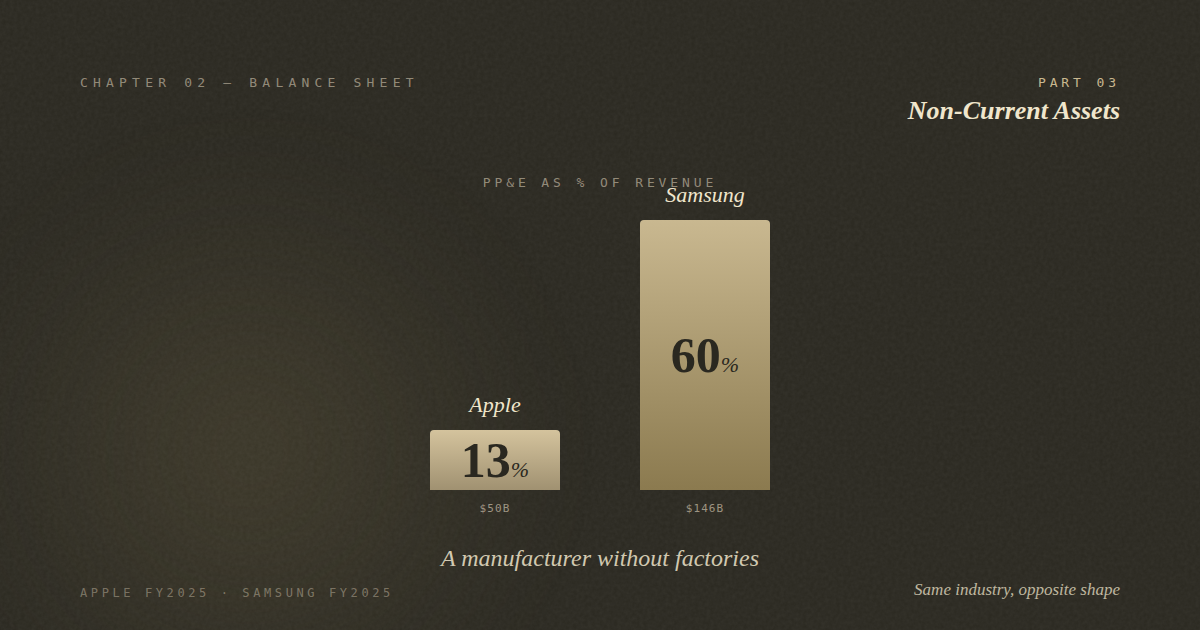
How to Read a Balance Sheet (Part 3): Non-Current Assets and Capital Expenditures
Apple's $211B in non-current assets reveals a company that holds more bonds than factories. With CapEx at just 3.2% of revenue versus 18% for peers, Apple's balance sheet looks more like a hedge fund than a manufacturer — a structural advantage that fuels its enormous buyback program.
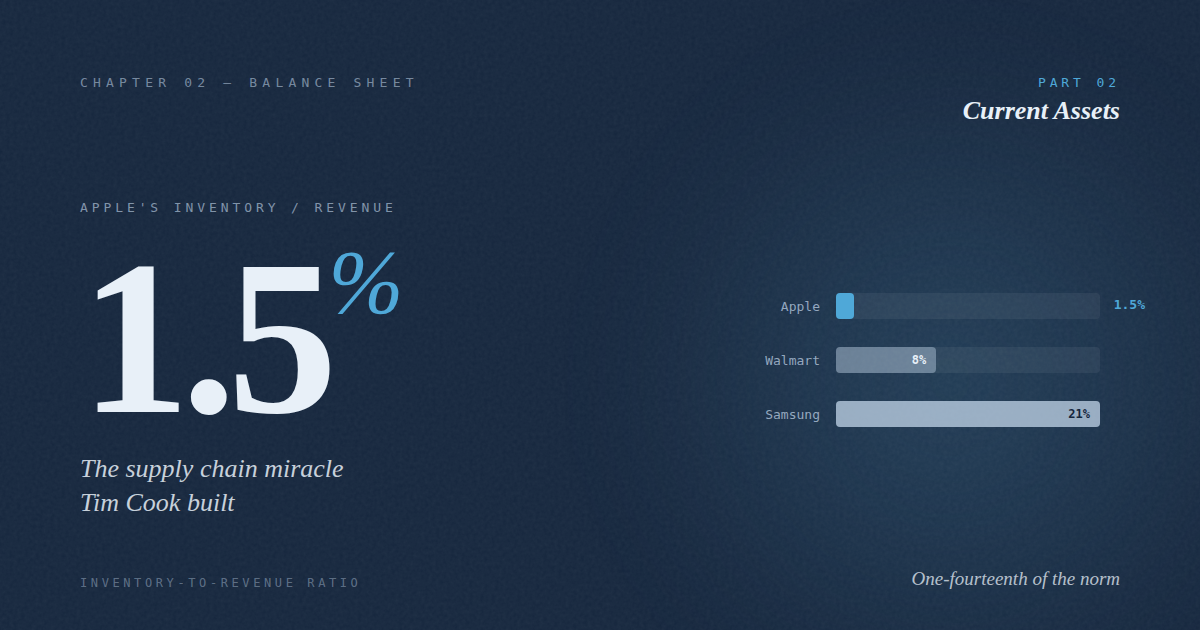
How to Read a Balance Sheet (Part 2): Inside Current Assets
Apple's $148B in current assets, line by line. Why $35.9B in cash isn't all cash, what 37-day DSO reveals about Apple's leverage over carriers, and how a $5.7B inventory and $33B in vendor non-trade receivables form the most powerful supply chain in commercial history.
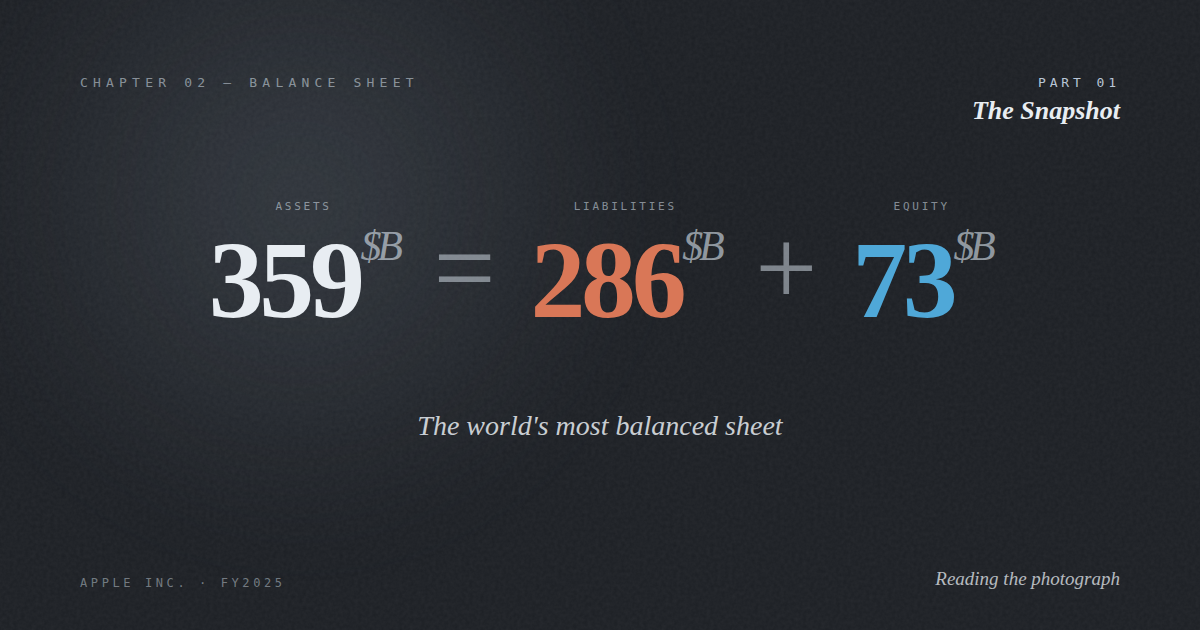
How to Read a Balance Sheet (Part 1): What It Tells You About Apple
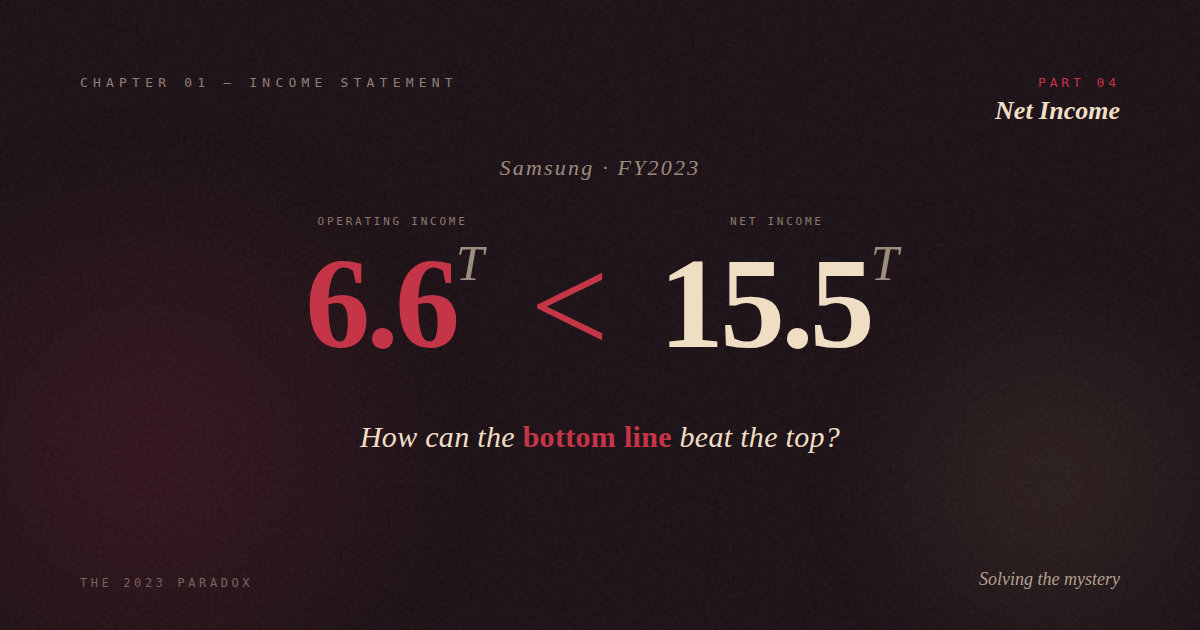
How to Read an Income Statement (Part 4): Non-Operating Income, Taxes & Net Income
Samsung's FY2023 operating income was only ₩6.6T, but its net income was ₩15.5T — more than 2× the operating profit. We unpack the last three lines of the income statement: Non-Operating Income, Taxes, and Net Income, and reveal why "never judge a company by net income alone" is the most important rule in fundamental analysis.
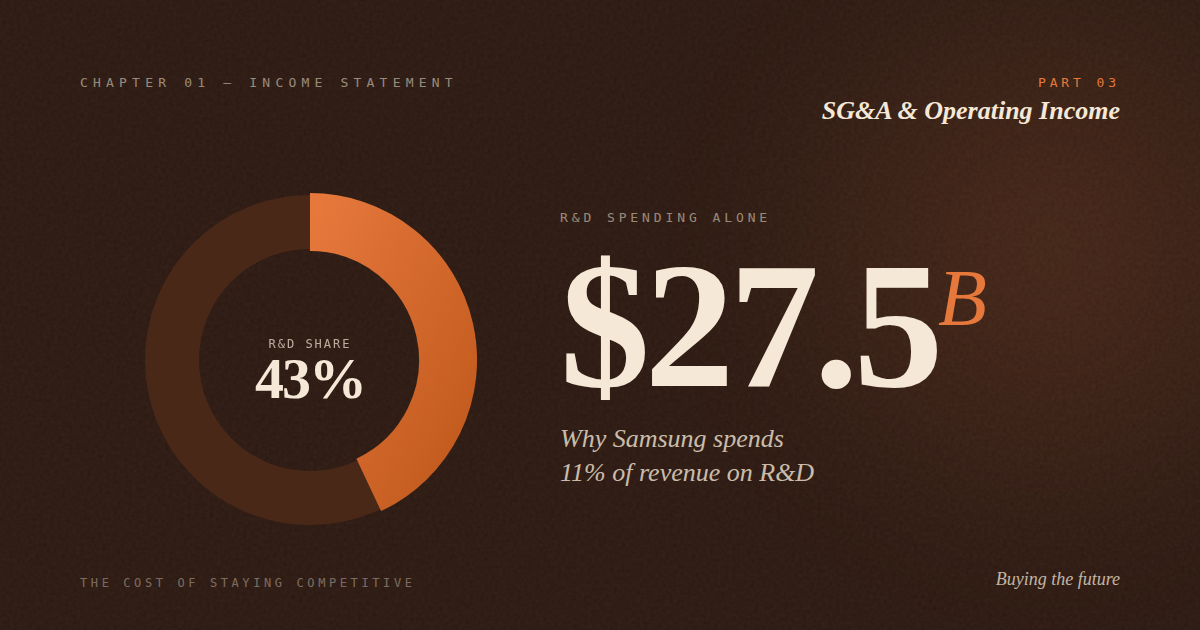
How to Read an Income Statement (Part 3): SG&A and Operating Income
Part 3 of the income statement series traces where Samsung's ₩88 trillion in SG&A went — and shows why R&D and operating margin reveal more about a business than revenue ever can. Plus a segment plot twist: Samsung's true profit engine is memory, not phones.
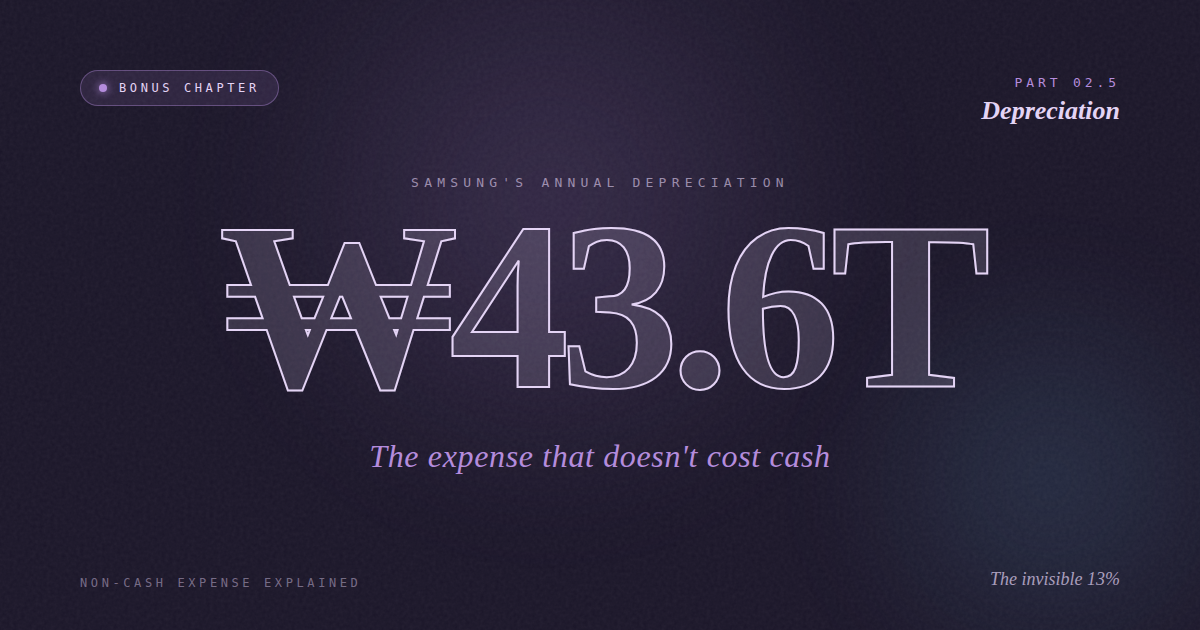
How to Read an Income Statement (Part 2.5): Depreciation, Explained
A bonus chapter that decodes depreciation — the ₩43T "non-cash expense" that confuses investors. Learn the matching principle, why EBITDA exists, and how Amazon survived years of "losses" through this single concept.

How to Read an Income Statement (Part 2): COGS and Gross Profit
Part 2 of the income statement series breaks down Cost of Goods Sold and gross profit using Samsung's FY2025 numbers. Samsung's gross margin jumped 9 percentage points in two years — here's what memory pricing and operating leverage have to do with it.
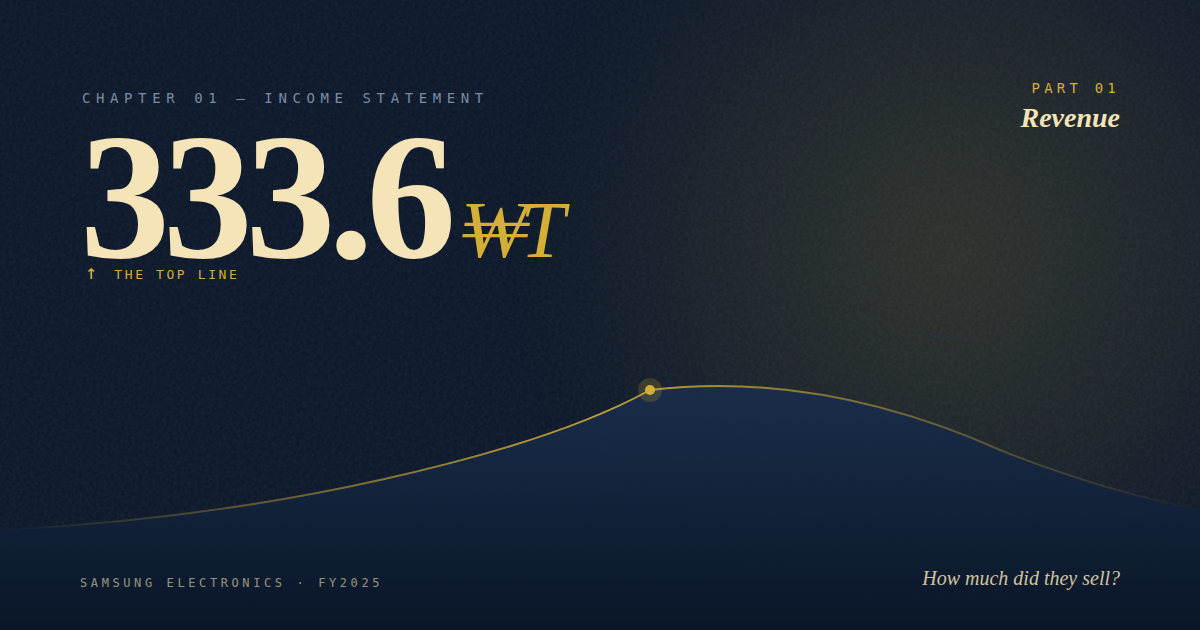
How to Read an Income Statement (Part 1): What Revenue Actually Tells You
A beginner's guide to reading revenue, the top line of the income statement — explained with Samsung Electronics' FY2025 ₩333.6 trillion ($243B) filing. Learn what revenue tells you, why you should break it down by product and geography, and why Samsung is fundamentally a cyclical memory business.

Why You Should Read 10-K Annual Reports: The Single Best Habit for Stock Investors
Most retail investors never read 10-K filings — the one document that tells the truth about a company. Reading annual reports is hard, but it's the single most reliable way to go from gambling on tickers to actually owning businesses. Here's why it's the best habit you can build as an investor.
All articles loaded