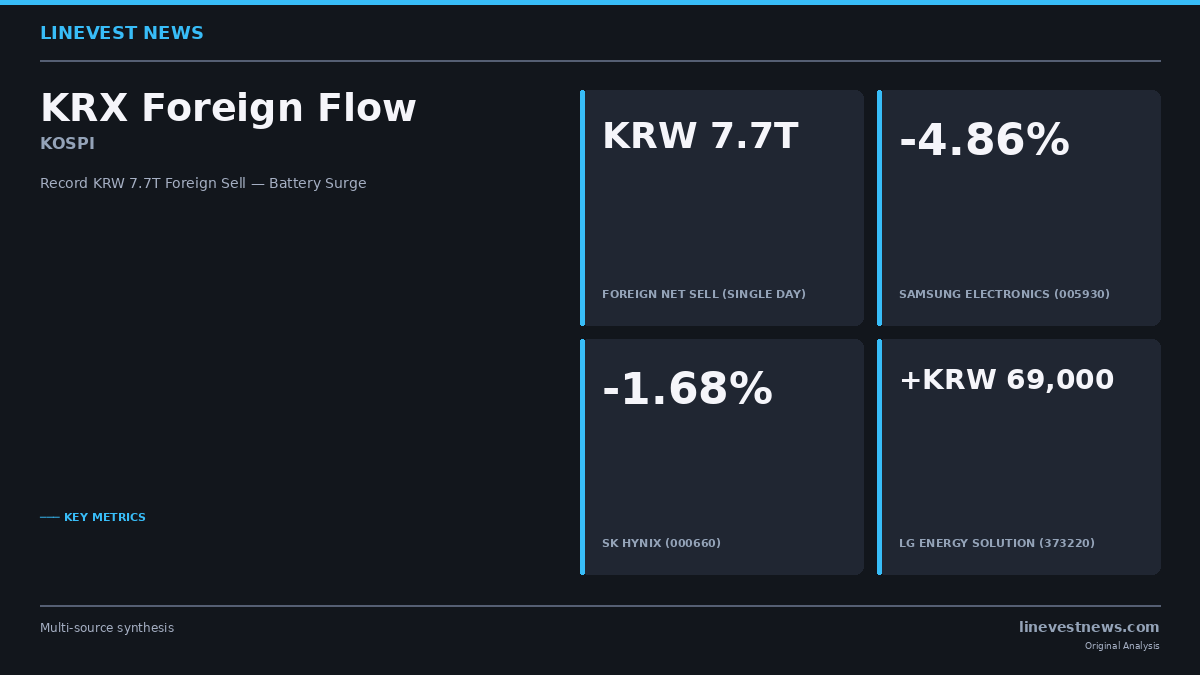
Foreign Investors Post All-Time Single-Day Net Sell Record of KRW 7.7 Trillion in Samsung, SK Hynix — Battery and Energy Stocks Surge on Sector Rotation
Foreign investors set a new single-session net selling record on the Korea Exchange (KRX) on Monday, June 30 [June 29 KST], offloading a combined KRW 7.7 trillion (approximately USD 5.6 billion) worth of KOSPI-listed shares — surpassing the previous all-time single-day record of KRW 7.0 trillion posted on February 27, 2026.
Despite the historic outflow, the benchmark KOSPI index recovered sharply from an intraday decline of as much as 3.4%, ultimately closing down just 0.2% as capital rotated rapidly into battery, energy, and construction stocks. The Kosdaq small-cap index surged more than 8% on the session.
Samsung, SK Hynix Bear the Brunt
Samsung Electronics (005930.KS) and SK Hynix (000660.KS) were the primary targets of the sell-off. Foreign investors were net sellers of KRW 3.8 trillion in Samsung Electronics and KRW 3.3 trillion in SK Hynix, sending the two flagship chipmakers down 4.86% and 1.68% respectively on the session. Samsung inched toward a -5% close before recovering slightly in late afternoon trading.
The scale of the outflow dwarfs recent precedents: over the seven preceding trading sessions, cumulative foreign net selling in the two names alone reached KRW 25 trillion. Month-to-date through June 26, foreign investors had net sold KRW 20.6 trillion in Samsung Electronics and KRW 15.9 trillion in SK Hynix, for a combined KRW 36.5 trillion — with the pace accelerating sharply into the session.
Year-to-date, aggregate foreign net selling across the KOSPI stands at approximately KRW 70 trillion, with Samsung and SK Hynix accounting for the majority.
Market Absorbs the Blow Through Sector Rotation
Despite the concentrated selling, the broader market held its ground with striking resilience. Of roughly 900 actively traded KOSPI-listed issues, 820 stocks closed higher while just 88 ended lower — a ratio that underscores how narrowly the foreign selling was focused.
The Kosdaq index's 8%-plus gain on the session reflected renewed appetite for growth names outside the chip complex, including smaller battery component makers, biotech companies, and AI software plays.
Battery and Infrastructure Names Rebound
Capital leaving semiconductor heavyweights found alternative destinations in sectors that benefit from Korea's government-backed "Three Mega-Projects" infrastructure push.
LG Energy Solution (373220.KS), the KOSPI's largest battery company by market capitalisation, rose KRW 69,000 on the session, while Samsung SDI (006400.KS) also posted gains. Energy utilities and construction companies, positioned as direct suppliers to the AI-infrastructure and next-generation semiconductor campus buildout, were among other notable outperformers.
Foreign investors, for their part, diversified rather than simply exiting Korea altogether: they were net buyers of semiconductor component names such as Samsung Electro-Mechanics (KRW 1.74 trillion in net purchases), and built positions in downside-protection products — including inverse ETFs tracking Samsung Electronics and SK Hynix — suggesting tactical hedging rather than a wholesale departure from Korean equities.
Context: "Sell the News" on Mega-Project, Global Tech Headwinds
Monday's session coincided with the government's national briefing on the Three Mega-Projects, at which Samsung Group and SK Group unveiled a combined KRW 800 trillion (approximately USD 580 billion) domestic investment plan: two chipmaking facilities apiece, targeting a doubling of Korea's DRAM production capacity within five years.
Market strategists offered a "buy the rumor, sell the news" interpretation. With both chipmakers having rallied more than threefold from their 2026 lows, analysts saw them as fully priced for an optimistic scenario and susceptible to any catalyst for profit-taking. "With memory companies currently generating windfall profits, reinvesting into capacity is a positive for Korea's economy and industrial base," said an investment officer at a Singapore-based asset management firm, while acknowledging near-term supply-expansion risk.
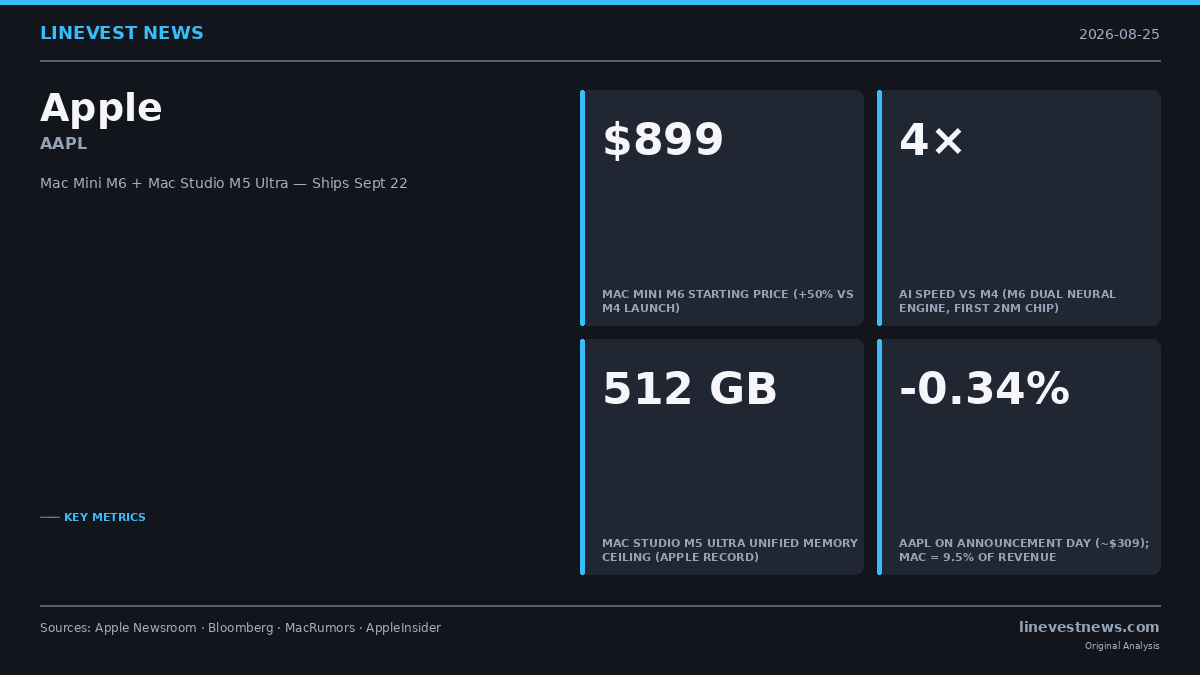
Global technology headwinds amplified the move. Apple Inc.'s recent product-price increases and reports of an OpenAI IPO delay weighed on AI-linked semiconductor demand sentiment, providing an additional trigger for profit-booking after the sharp year-to-date run-up.
Retail investors responded to the sell-off by stepping in as buyers, accumulating KRW 34.4 trillion in Samsung Electronics and SK Hynix purchases during June, effectively absorbing a substantial portion of the foreign outflow and helping prevent a deeper market correction.
Sources: Yahoo Finance / Bloomberg · Financial News Korea (파이낸셜뉴스) · KRX (Korea Exchange data via Chosun Biz)