Part A — The News
LG Chem (KRX: 051910) has signed a multi-year research collaboration, option and license agreement with UK-based LabGenius Therapeutics to jointly develop AI-designed multispecific antibody therapies for solid tumours, the companies announced on June 18.
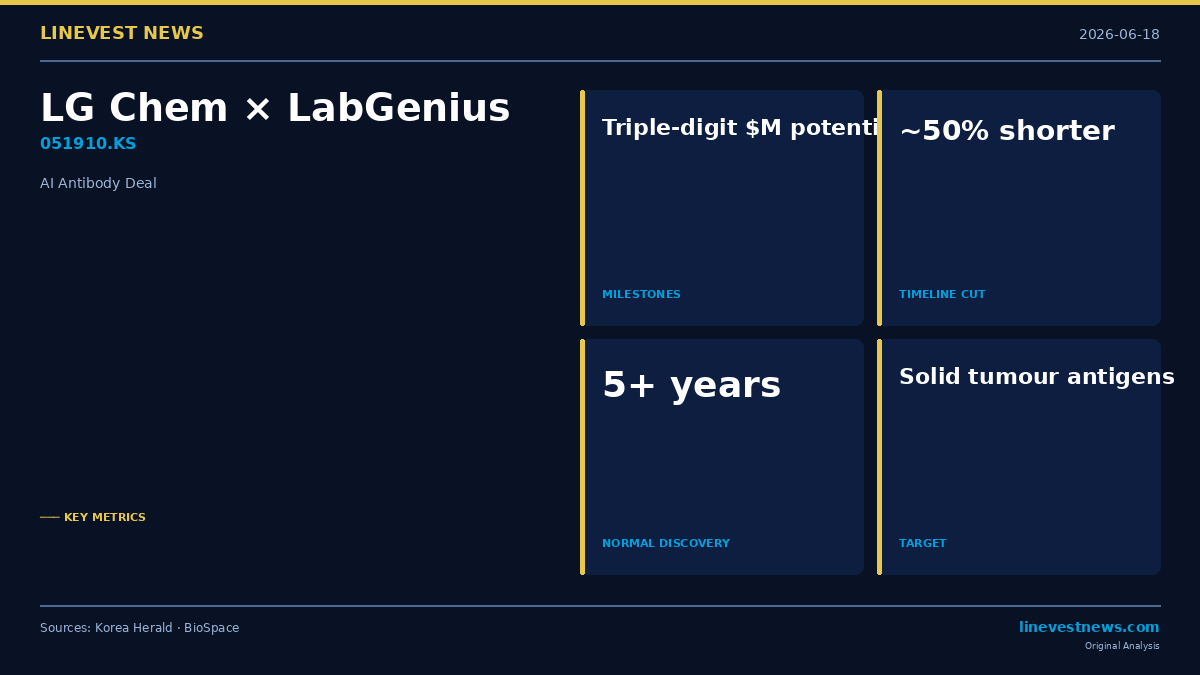
At the centre of the deal is LabGenius's EVA™ platform, which combines machine-learning models with automated high-throughput experimentation and synthetic biology to continuously design, test and refine therapeutic antibody candidates. The technology is expected to roughly halve the antibody-discovery timeline — a process that typically takes more than five years — and accelerate the transition into preclinical development.
The two companies will initially focus on developing a novel tumour-selective multispecific antibody against a solid-tumour antigen expressed across multiple difficult-to-treat cancer types. LabGenius will conduct in vitro efficacy studies during the research phase; LG Chem will then handle further preclinical and in vivo development. After the research phase concludes, LG Chem holds an option to license the programmes based on pre-agreed evaluation criteria.
Financial terms: LG Chem is funding all R&D activities and has paid an undisclosed upfront fee. The agreement also provides for early-stage milestone payments, triple-digit million USD in potential clinical, regulatory and commercial milestones, and royalties on net sales, according to the official press release.
"LabGenius has built a highly differentiated AI drug discovery platform that integrates automated wet labs and computational dry labs, enabling rapid candidate discovery and early-stage validation," said So Jin-eon, head of life science R&D at LG Chem.
Dr. James Field, CEO of LabGenius, called the partnership "a very important moment" for the company, adding that LG Chem's therapeutic expertise would complement the EVA™ engine in accelerating programmes toward clinical entry.
Part B — The Korea Context
The agreement deepens LG's existing bet on AI-driven pharmaceutical research. LG Chem has developed an in-house AI platform called MediX, which spans drug-target identification through candidate efficacy prediction. The company also co-operates with Galux Inc. on anticancer protein compounds and is building a genomic analysis model with LG AI Research.
LabGenius itself has prior ties to the LG ecosystem: LG Corp. participated in the company's Series B funding round, suggesting today's formal collaboration follows a period of strategic due diligence rather than an arm's-length partnership.
The move underscores a broader trend in Korean pharma: established chemical companies are pivoting toward high-value biologics and AI-enabled drug discovery to diversify beyond commodity petrochemicals. LG Chem already sold a majority stake in its battery business (LG Energy Solution) in 2022; since then, life sciences has become a key growth engine within the parent group.
For LabGenius, which has previously struck AI antibody optimisation deals with Sanofi, landing LG Chem as a partner adds a major Asia-Pacific commercial pathway for its platform technology.
Key risk: Early-stage discovery collaborations carry high attrition — most antibody candidates fail before reaching clinical trials. The triple-digit milestone figure is contingent on multiple development hurdles that could take a decade to clear. The upfront economics for LG Chem remain undisclosed.
Sources: Korea Herald, BioSpace, Korea Biomedical Review, Yonhap, MK Economy (June 18, 2026)