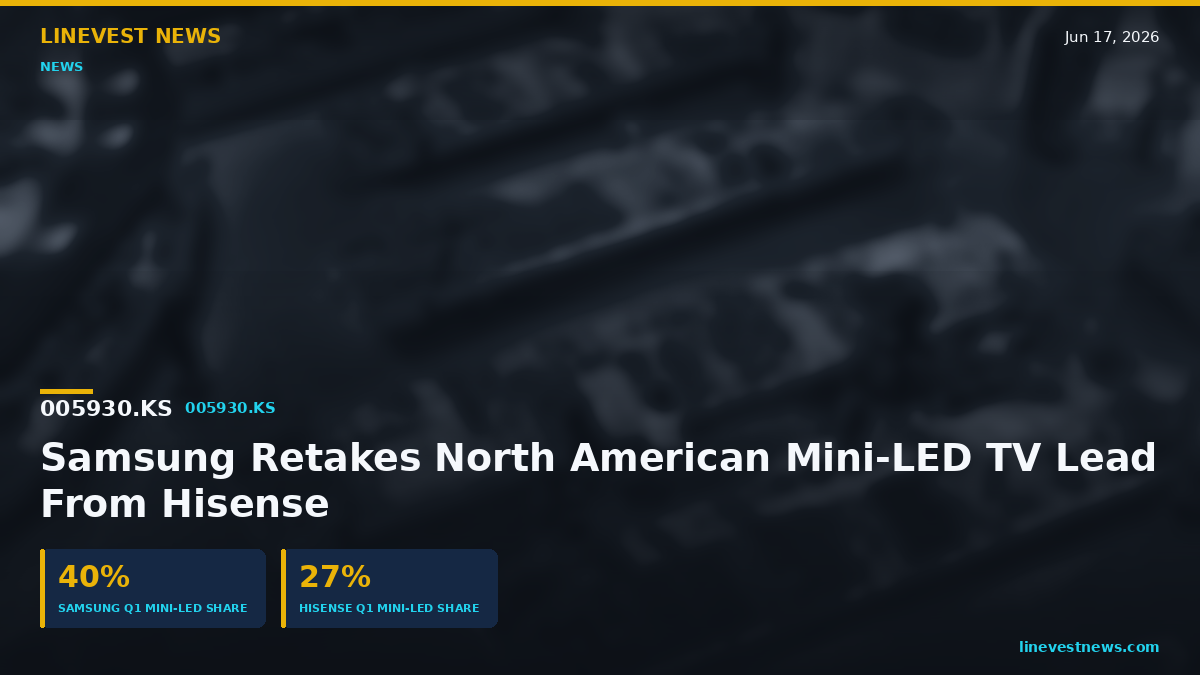
Samsung Electronics (005930.KS), the world's largest TV maker by shipments, reclaimed the top spot in North America's mini-LED television market in the first quarter of 2026, reversing a narrow loss to China's Hisense the year before. According to a quarterly shipment tracker published June 16 by Counterpoint Research, a Hong Kong-based technology market researcher, Samsung captured a 40% share of the North American mini-LED segment in Q1, well ahead of Hisense's 27%.
The swing is meaningful because the gap had been razor-thin. For full-year 2025, Hisense led the same segment with a 32% share against Samsung's 31%, per Counterpoint Research figures cited by Chosun Biz. Samsung's jump to 40% in the first 90 days of 2026 therefore represents both a recapture of the lead and a widening of the margin — from roughly one point behind to thirteen points ahead.
What is pulling Samsung's numbers up
Counterpoint attributes much of the Q1 strength to TV buying brought forward ahead of the FIFA World Cup, the global soccer tournament co-hosted across North America in June and July 2026. Mini-LED panels, prized for high brightness and color accuracy, are marketed heavily for live-sports viewing. Samsung said it is leaning into that demand with a two-pronged lineup — its premium Micro RGB series alongside entry-level mini-LED models — paired with FIFA+ streaming content, expanded AI features and discount promotions, according to the Counterpoint report relayed by Chosun Biz.
The quarter's strength sits inside a broader franchise that remains dominant. Samsung was the world's No. 1 TV brand by shipments for a 20th consecutive year in 2025, holding a 29.1% global share that year according to research firm Omdia, and led the premium tier priced above USD 2,500 with a 54.3% share. In North America's total TV market it held roughly 46.1% in the period, per Media Play News citing Counterpoint data. Mini-LED is one battleground within that larger position, not the whole of it.
Why the lead may not hold
The complicating factor is that Hisense is not a passive challenger this quarter. The Chinese manufacturer is an official sponsor of the FIFA World Cup 2026 and the tournament's official Video Assistant Referee (VAR) review TV provider, with its RGB Mini-LED sets deployed in the VAR operations center at the International Broadcast Centre in Dallas, Hisense confirmed in a June 15 statement. That is a marketing platform Samsung does not have for this event.
Hisense is also democratizing its premium technology. RGB mini-LED — which uses independently controlled red, green and blue light sources — had been confined to a roughly USD 30,000, 116-inch flagship, but Hisense is extending it across 55- to 100-inch consumer sets, per Chosun Biz, while pricing mainstream mini-LED models from USD 1,299.99 according to Media Play News. Counterpoint's research director Bob O'Brien framed the dynamic directly: "Samsung has led this market, but Hisense is threatening its position by bringing large-screen, value-for-money products," he said in comments carried by Chosun Biz.
The data point that decides it
Both the manufacturers and the analysts agree the second quarter is the swing period. Counterpoint flagged Q2 — when Hisense historically ramps shipments around new-product launches and when tournament-driven demand concentrates in June and July — as the quarter that will define the 2026 contest. The next Counterpoint quarterly tracker covering April–June shipments is therefore the figure to watch: it will show whether Samsung's 40% Q1 share was a durable shift or a pull-forward that Hisense's sponsorship and cheaper RGB sets erode once the matches begin.
The mini-LED leadership news arrived alongside two other Samsung product disclosures dated June 16 — strengthened anti-phishing security on its upcoming second-half Galaxy handsets running One UI 9.0, and a hotel-oriented 'The Frame' art TV unveiled at the HITEC 2026 trade show in San Antonio, Texas — underscoring a broad consumer-electronics push as the company defends premium share.
This article is for informational purposes only and does not constitute investment advice. Figures are sourced from Counterpoint Research, Omdia and company statements as cited; readers should verify current data before making any decisions.