
Samsung Electronics (005930.KS), the world's largest memory chipmaker, and SK Hynix (000660.KS), the leading supplier of high-bandwidth memory (HBM) used in AI accelerators, are jointly expected to post second-quarter operating profit exceeding ₩150 trillion ($110 billion), a fresh combined record, according to a consensus of 15 brokerages compiled by Yonhap Infomax, the financial-data arm of Korea's Yonhap News Agency.
For a New York or London fund manager, the headline raises one question immediately: with both stocks at record highs and an "AI bubble" debate intensifying, are these numbers already priced in — and what could break the run? The most-watched data points cut in opposite directions.
How big the quarter is
The scale is the story. Samsung alone is projected to report Q2 revenue of ₩171.73 trillion ($125 billion) and operating profit of ₩88.30 trillion ($64 billion), per the Yonhap Infomax consensus — gains of 130% in revenue and 1,788% in operating profit from a year-earlier base depressed by the memory-price downturn. That single-quarter profit forecast would exceed Samsung's own previous record, the ₩57.2 trillion ($42 billion) it actually booked in Q1 2026, by more than half.
SK Hynix is seen posting Q2 revenue of ₩83.41 trillion ($61 billion) and operating profit of ₩64.32 trillion ($47 billion), according to the same consensus. At those levels SK Hynix's operating margin would approach 80%, the EBN report noted, versus an estimated 56.5%–58.5% for TSMC, the world's largest contract chipmaker — an unusual inversion in which a memory maker out-earns the foundry leader on a percentage basis. The surge is driven by simultaneous price increases across commodity DRAM, NAND flash and HBM as AI data-center buildouts strain supply.
The bull case from Europe's largest asset manager
Against that backdrop, Alessia Berardi, head of emerging-market strategy at Amundi, Europe's largest asset manager, told Bloomberg on June 5 that the rally is not stretched. "We are not seeing a bubble," Berardi said, adding that while earnings expectations for Samsung and SK Hynix are "very high," valuations "may still be reasonable" relative to the profits the companies are expected to generate, according to Seoul Economic Daily's account of the interview.
Berardi projected that roughly $5 trillion will be invested in building AI infrastructure by 2030, leaving room for semiconductor, server and hardware supply-chain names to advance further, the same report said.
What the precedent shows
The Q1 2026 quarter is the relevant precedent for how fast these figures have moved. Samsung's ₩57.2 trillion first-quarter operating profit — up 756% year-on-year — was so large it exceeded the company's entire FY2025 full-year operating profit of ₩43.6 trillion ($32 billion), per Samsung's first-quarter results release. The Memory Business set all-time highs for quarterly revenue and operating profit on higher average selling prices. The Q2 consensus assumes that trajectory not only holds but accelerates.
The open question
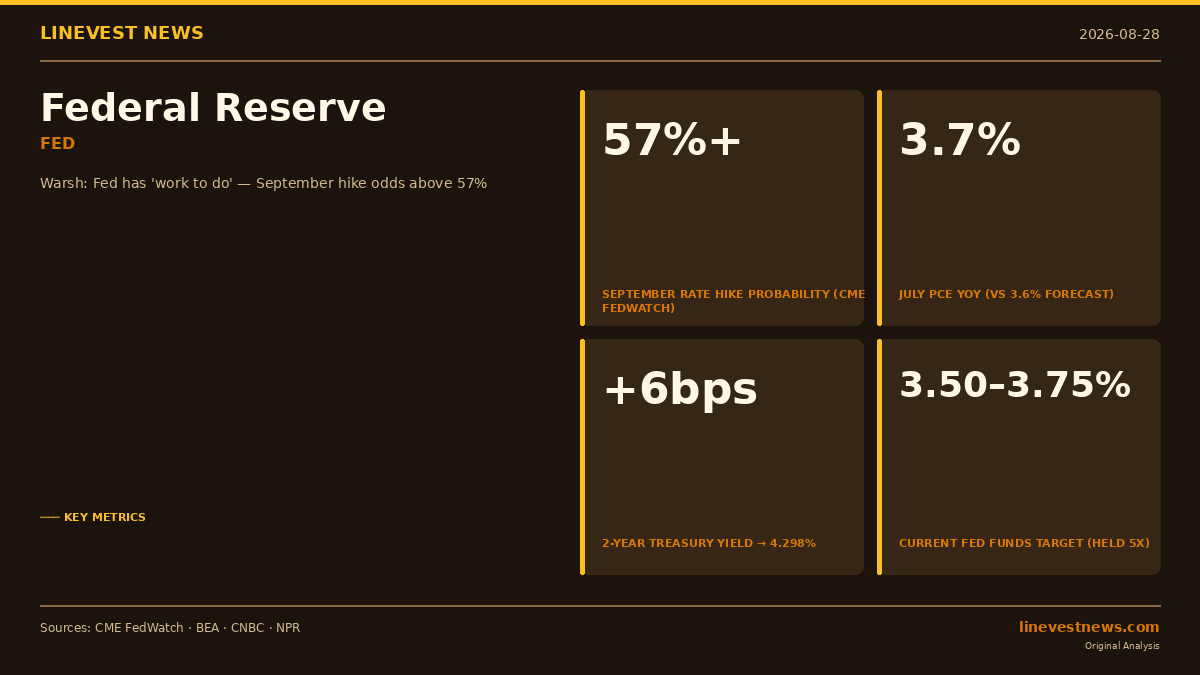
The risk Berardi herself flagged is external, not operational. "The outlook still depends heavily on the U.S. investment cycle," she said, warning that rising U.S. bond yields could lift financing costs and prompt Big Tech buyers to "slow the pace of their investments" in AI infrastructure, per Seoul Economic Daily. That makes Federal Reserve policy expectations the swing variable for a rally built on Korean and Taiwanese chip names.
The consensus will face its first hard test when Samsung and SK Hynix disclose preliminary second-quarter results in July. Whether reported operating profit lands near the ₩150 trillion combined mark — or whether memory pricing has already peaked — will determine if the "no bubble" thesis survives contact with the actual numbers.
This article is for informational purposes only and does not constitute investment advice. Figures are forecasts or as-reported results attributed to the cited sources and are subject to change.
Sources: Yonhap News Agency • Asia Economy (Asiae)