"Triple-Digit Revenue Surge Meets Net Income Contraction — Cost Expansion and Prior-Year Non-Operating Windfall Elimination Restructure Earnings"
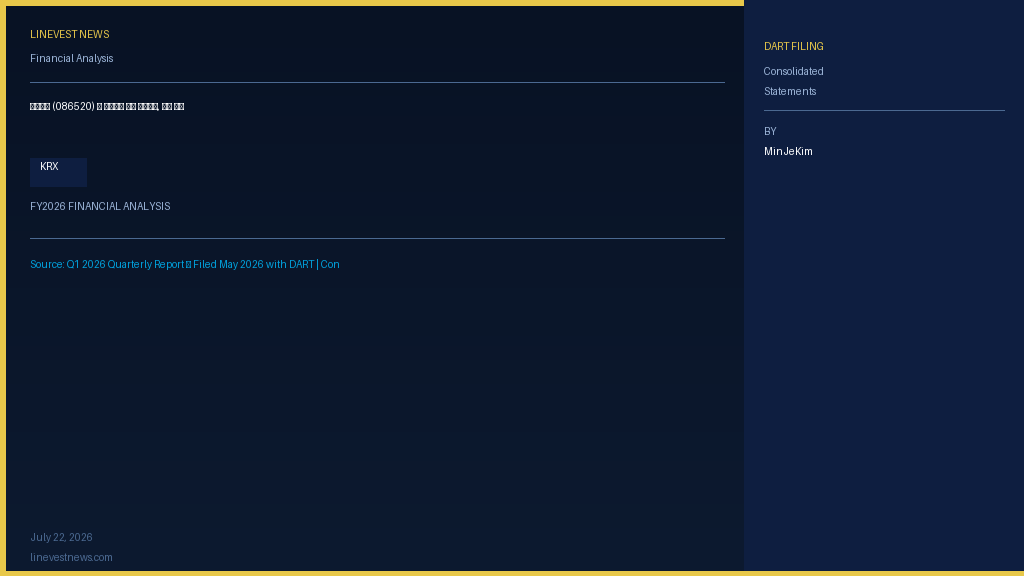
Source: [첨부정정]사업보고서 (2025.12) — Filed 2026.03.19 with DART | Consolidated Financial Statements | Unit: KRW billions
| Item | Prior (₩B) | Current (₩B) | YoY |
|---|---|---|---|
| Revenue (₩B) | 11,240.1 | 26,702.9 | ▲137.6% |
| Operating Income (₩B) | 1,731.9 | 3,089.3 | ▲78.4% |
| Op. Margin | 15.4% | 11.6% | |
| Net Income (₩B) | 2,539.9 | 2,202.0 | ▼13.3% |
| Net Margin | 22.6% | 8.2% | |
| Operating Cash Flow (₩B) | 1,393.0 | 4,049.8 | ▲190.7% |
| Free Cash Flow-FCF (₩B) | 814.8 | 2,339.3 |
Key Financial Highlights at a Glance
1. Revenue and Profitability
Profitability Metrics
| Item | Prior (₩B) | Current (₩B) | YoY |
|---|---|---|---|
| Revenue (₩B) | 11,240.1 | 26,702.9 | ▲137.6% |
| Operating Income (₩B) | 1,731.9 | 3,089.3 | ▲78.4% |
| Net Income (₩B) | 2,539.9 | 2,202.0 | ▼13.3% |
| Op. Margin | 15.4% | 11.6% | |
| Net Margin | 22.6% | 8.2% |
2. Cost Structure
| Cost Item | Prior (₩B) | Prior % | Current (₩B) | Curr % | YoY |
|---|---|---|---|---|---|
| (데이터 없음) | - | - | - | - | - |
- DOL = 0.57 — a positive but sub-1x reading that defines a low-leverage structure: for every 1% increase in revenue, operating income grows only 0.57%, as the relatively high weight of variable costs (COGS) limits the efficiency with which revenue growth converts into operating profit.
- COGS growth exceeded the already elevated revenue growth rate, making it the primary driver of operating margin contraction. SG&A also expanded in line with revenue growth, but its contribution to margin compression was subordinate to that of COGS.
- The variable cost (COGS) share of revenue rose year-on-year, while the fixed cost (SG&A) share showed comparatively limited movement — pointing to raw material and production input cost inflation from large-scale manufacturing expansion as the structural source of cost base widening.
3. Balance Sheet Analysis
3-1. Assets
| Item | Prior (₩B) | Current (₩B) | YoY |
|---|---|---|---|
| Total Assets | 43,561.9 | 53,953.7 | ▲23.9% |
3-2. Liabilities
| Item | Prior (₩B) | Current (₩B) | YoY |
|---|---|---|---|
| Current Liabilities | 25,516.1 | 29,976.4 | ▲17.5% |
| Non-current Liabilities | 6,553.8 | 7,189.1 | ▲9.7% |
| Total Liabilities | 32,069.9 | 37,165.5 | ▲15.9% |
3-3. Equity
| Item | Prior (₩B) | Current (₩B) | YoY |
|---|---|---|---|
| Common Stock | 2,404.1 | 2,703.2 | ▲12.4% |
| Retained Earnings | 47,465.2 | 59,827.4 | ▲26.0% |
| Total Equity | 114,920.1 | 167,881.8 | ▲46.1% |
4. Cash Flow Analysis
| Item | 2Y Prior (₩B) | Prior (₩B) | Current (₩B) |
|---|---|---|---|
| Operating Cash Flow | 13,902.2 | 1,393.0 | 4,049.8 |
| Capital Expenditure (CapEx) | 4,533.6 | 5,782.0 | 17,105.0 |
| Investing Cash Flow | -30,291.2 | -13,673.4 | -40,207.8 |
| Financing Cash Flow | 3,677.6 | 10,656.7 | 46,815.9 |
| Ending Cash | 18,063.6 | 29,677.3 | 77,133.6 |
| Free Cash Flow (FCF) | - | 814.8 | 2,339.3 |
Investing cash flow recorded a deep outflow, widening significantly versus the prior year in tandem with the near-tripling of CapEx. The increase in property, plant & equipment acquisition was the primary driver of investing outflow expansion.
FCF (Free Cash Flow) — Operating CF minus CapEx — was positive and expanded substantially versus the prior year, sustaining two consecutive years of positive FCF. The FCF improvement occurred because the absolute increase in operating cash flow exceeded the net incremental CapEx spend, even as percentage growth rates for both were broadly comparable.
5. Key Financial Ratios
| Ratio | 2Y Prior | Prior | Current |
|---|---|---|---|
| Operating Margin | 7.5% | 15.4% | 11.6% |
| Net Margin | 12.4% | 22.6% | 8.2% |
| ROE | 20.9% | 22.1% | 13.1% |
| ROA | 5.0% | 5.8% | 4.1% |
| Current Ratio | - | 0.90x | 1.02x |
| D/E Ratio | 3.17x | 2.79x | 2.21x |
| Dividend Payout | - | 4.7% | 8.9% |
Profitability trend: Operating margin recovered sharply in the prior year from the year-prior base, then partially retraced in the current year. Net margin fell to a three-year low in the current year — a pattern entirely consistent with the elimination of the prior year's non-operating income windfall as the dominant structural driver.
Capital efficiency trend: ROE declined in the current year, pressured by the simultaneous occurrence of net income contraction and a sharp expansion in equity — including a capital raise. ROA also declined as asset growth, driven by CapEx execution and working capital expansion, outpaced earnings growth.
6. Key Takeaways and Outlook
Growth Catalysts
Risks
1. Persistent margin compression from low operating leverage: The DOL = 0.57 low-leverage structure — in which cost growth outpaces revenue growth — drove operating margin contraction versus the prior year. Continued cost base expansion is a direct margin headwind as long as variable cost intensity remains elevated.
Overall Assessment
Hanwha Aerospace achieved a historic revenue step-change in FY2025, entering a structural growth trajectory in defense and aerospace. However, the low-leverage cost structure (DOL = 0.57) — in which cost growth persistently outpaces revenue growth — combined with the elimination of the prior year's large non-operating income windfall, compressed both operating margin and net margin simultaneously, producing the defining profitability paradox of the fiscal year: triple-digit revenue growth alongside net income contraction. On the financial stability front, the third consecutive year of debt-to-equity ratio improvement and sustained positive FCF are constructive, though the current ratio sitting just above 1x warrants continued monitoring. Whether the large CapEx program translates into the additional revenue and margin expansion that justifies its cost — or whether cost base widening continues to erode profitability — is the defining medium-term question for this company's earnings trajectory.
Disclaimer: This report is prepared for informational purposes only based on DART public filings and does not constitute investment advice. LineVest News does not hold positions in the securities mentioned.