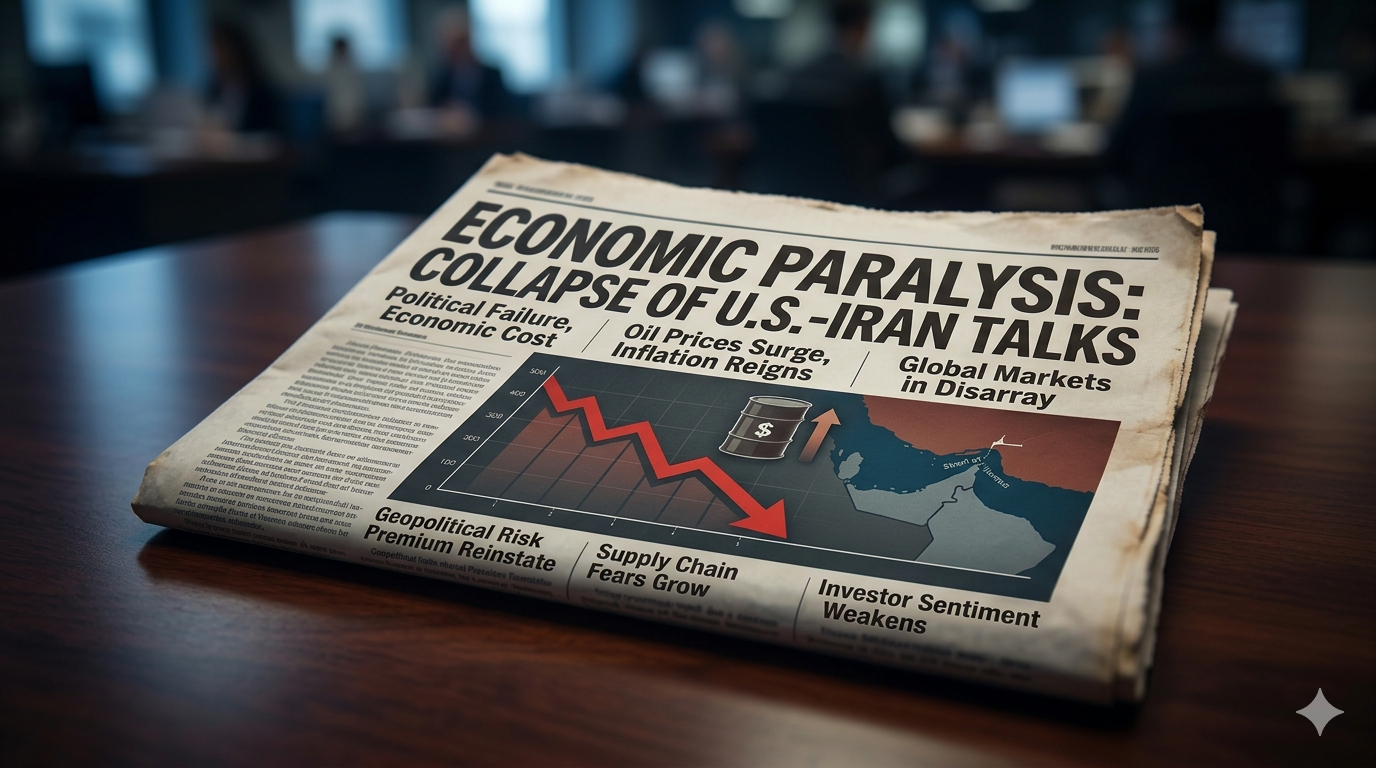
- Oil prices plummeted after President Trump announced a 14-day conditional ceasefire with Iran.
- For daily commuters and field workers, the "Economic War" has been as brutal as the physical conflict.
- True economic recovery depends on restoring "predictability" for ordinary citizens.
I drive a lot for my work. As an interior painter and waterproofing specialist, my job sites change constantly—sometimes lasting only two or three days, or at most, two weeks. Every morning, the road to a new site is the lifeline of my business. But lately, I've been terrified to get behind the wheel. The reason is simple: the sudden, staggering spike in gas prices.
Watching the numbers on the gas station sign change almost daily, the fuel burning away on the highway felt like more than just liquid; it felt like my hard-earned profit and sweat evaporating in real-time. For me, the fear of war wasn't a distant sound on the news—it was a tangible, rhythmic drain on my wallet and my livelihood.
The Invisible Frontline: We Are All Economic Veterans
The recent conflict in the Middle East was never just a story about a faraway land. This war launched a relentless "economic bombardment" on ordinary citizens in neutral countries through skyrocketing energy costs and grocery bills. When Brent crude surged past $100 per barrel and the Strait of Hormuz faced total blockade, the shockwaves traveled instantly to my local gas station and my family's dinner table.
Energy and logistics are the lifeblood of the modern economy. When these arteries are constricted, the screams don't come from market indices first—they come from the sighs of working-class people. For technicians like me, who must travel daily to different sites, rising oil prices are a direct hit. The fear of "how much more will it cost tomorrow?" was far more paralyzing than any official government statistic. We didn't carry rifles, but we were forced into a daily battle against rising price tags.
The 14-Day Ceasefire: A Metric of Psychological Weight
The announcement on April 7th of a two-week conditional ceasefire between President Trump and Iran brought immediate, much-needed warmth to the frozen markets. Oil prices took a vertical dive, and global stock markets experienced a record-breaking "relief rally."
However, this dramatic reversal tells us one thing clearly: the fact that a mere 14-day promise could trigger such a massive reaction proves how heavy the "burden of uncertainty" truly was. The reason Consumer Sentiment hit its lowest point since late 2025 wasn't just because things were expensive; it was because we had lost the ability to predict our future.
Peace is the Ultimate Economic Welfare
This war has taught global citizens a painful lesson: geopolitical risk is no longer the exclusive domain of politicians. A single political decision can instantly change the daily mood and the dinner menu of a worker traveling to a job site on the other side of the planet.
The ceasefire has begun, but the anxiety hasn't fully vanished for those of us staring at the gas pump. True economic recovery isn't found in a rising KOSPI or S&P 500 index; it is achieved when citizens are finally free from the fear lurking behind the price tag. I hope the upcoming negotiations in Islamabad serve as a foundation for "Economic Peace"—one that protects the daily lives of ordinary people. What we need isn't just news about trillion-dollar companies, but the simple, quiet assurance that the price of gas and groceries won't skyrocket again tomorrow.
*Thumbnail image: AI-generated by Google Gemini